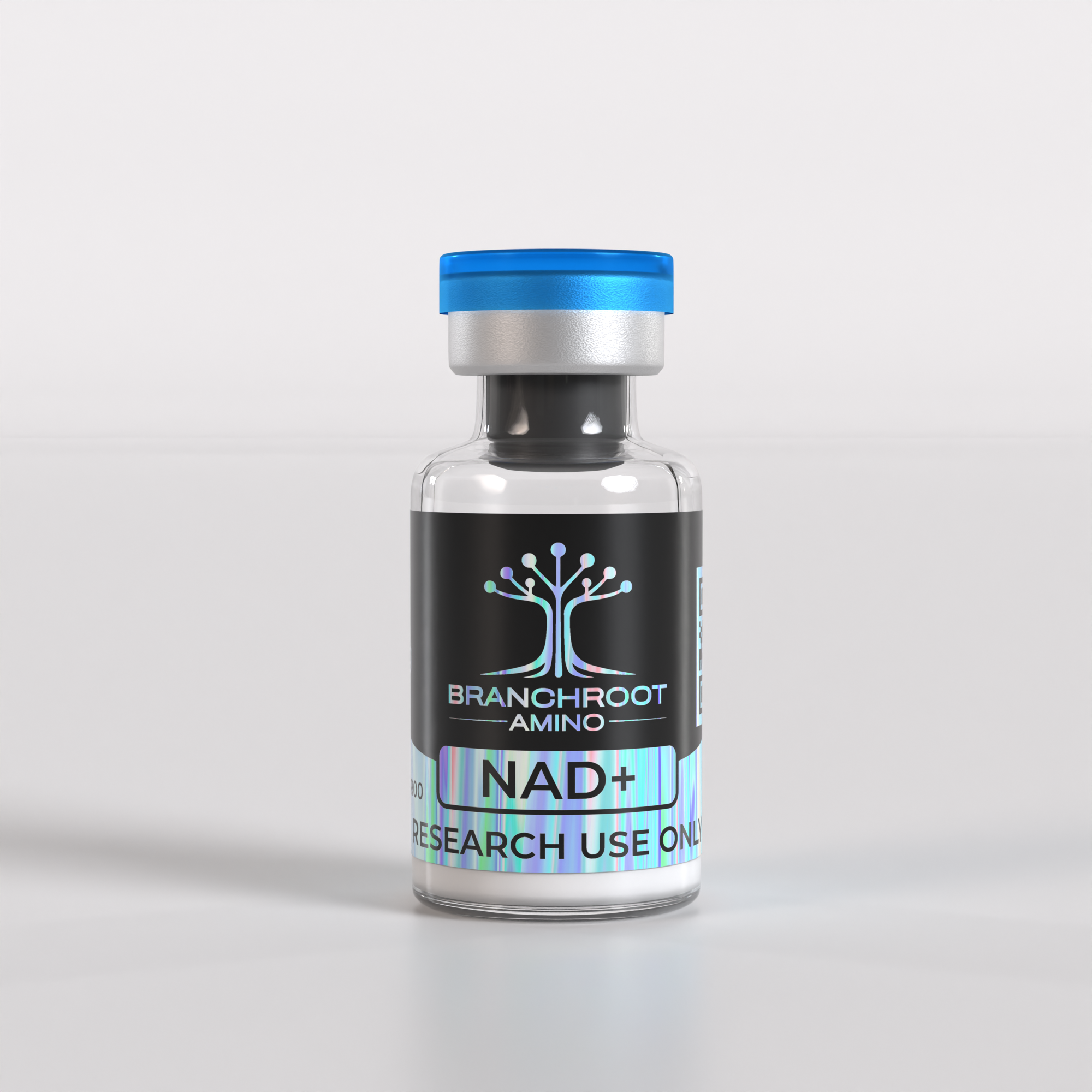
NAD+

Categories:

NAD+ (Nicotinamide Adenine Dinucleotide) is a crucial coenzyme involved in numerous cellular processes. Widely used in biochemical and molecular biology research, this peptide plays a crucial role in NAD+-dependent enzymatic reactions and biosynthetic pathways. Emerging research highlights NAD+ depletion as a significant factor in age-related decline, neurodegenerative diseases, and metabolic disorders.

This compound is intended for academic and research applications only within controlled scientific environments, with no therapeutic or medical claims made. For research use only.

Reconstitution with BranchRoot bacteriostatic water is recommended for quality assurance.

BUILD YOUR BUNDLE

Choose Quantity & Save

Product Option Select concentration / variation
Bundle Size Discount increases automatically
Quantity 1 Vial
You Save
Total
1

Price range: $35.00 through $85.00

Satisfaction Guaranteed

Secure
Payment

Third-party
Tested

Research Use Disclaimer

All products offered are intended strictly for laboratory research purposes. Products are not for human consumption and are not intended for diagnostic, therapeutic, or medical use. By purchasing from our website, customers confirm they are qualified researchers or laboratories and understand the intended research-use designation.

NAD+ Peptides for Research Use

NAD+ (Nicotinamide Adenine Dinucleotide) is a crucial coenzyme involved in numerous cellular processes. This research-use-only peptide formulation is designed for academic and industrial research applications to study NAD+-related biochemical pathways and metabolic mechanisms. This product does not contain therapeutic compounds and is intended exclusively for non-clinical, experimental purposes.

Research Context

NAD+ plays a fundamental role in cellular respiration, energy metabolism, and aging research. As a key component in the electron transport chain, NAD+ is essential for processes such as glycolysis, oxidative phosphorylation, and DNA repair. Emerging research highlights NAD+ depletion as a significant factor in age-related decline, neurodegenerative diseases, and metabolic disorders. Peptides that target NAD+-related pathways allow researchers to investigate mechanisms of cellular aging, mitochondrial function, and metabolic regulation under controlled conditions.

Research Overview

NAD+ research has expanded across multiple scientific disciplines, including biochemistry, gerontology, and pharmacology. Studies utilize NAD+ precursors, analogs, and modulating agents to assess their effects on mitochondrial biogenesis, NAD+-dependent enzyme activities, and lifespan extension models. In academic settings, this product may be used in biochemical assays to study NAD+-dependent enzymes such as sirtuins, PARP, and CD38. Industrial applications may involve the development of NAD+-boosting compounds for potential future research applications in anti-aging or metabolic health.

Key Research Focus Areas

  • Mitochondrial Function and Biogenesis: Investigation of NAD+-mediated regulation of PGC-1α and TFAM to assess mitochondrial health and energy production in various cell models.
  • Cellular Aging and Lifespan: Examination of NAD+-depletion effects in model organisms and cell cultures to understand aging mechanisms and potential intervention points.
  • Neurodegenerative Disease Mechanisms: Analysis of NAD+-dependent pathways in models of Alzheimer’s, Parkinson’s, and Huntington’s diseases to identify therapeutic targets.
  • Metabolic Regulation and Obesity: Study of NAD+-modulating effects on insulin sensitivity, lipid metabolism, and energy homeostasis in preclinical models.
  • Stress Response and DNA Repair: Investigation of NAD+-dependent enzymes such as PARP-1 in response to oxidative stress and DNA damage repair mechanisms.

Product Formulation and Stability

This research-grade peptide formulation is designed to maintain structural integrity and activity under controlled laboratory conditions. The product contains purified NAD+-related peptides with no therapeutic modifications, ensuring compliance with research-only specifications. Stability studies indicate optimal conditions for storage at 4°C with minimal degradation over a defined shelf life. Researchers should follow established protocols for handling, dilution, and assay preparation to ensure experimental validity.

Important Compliance and Safety Information

NAD+ is intended solely for research purposes and must be handled with the utmost care.
Users are responsible for ensuring compliance with all applicable local, regional, and national
laws and regulations governing peptide synthesis, storage, and distribution. Users must ensure
compliance with all relevant regulations governing research materials, including those related to
biohazards, chemical safety, and experimental oversight. Proper handling, storage, and disposal
procedures must be followed at all times. Research institutions conducting studies involving NAD+
must adhere to Institutional Review Board (IRB) or equivalent
biosafety procedures, laboratory handling standards, and animal welfare protocols.

Due to its biological activity, NAD+ requires proper containment measures,
sterile handling techniques, and controlled storage procedures to minimize contamination
and unintended exposure. NAD+ is not intended for therapeutic or diagnostic applications
in humans or animals, and should only be utilized within a licensed research environment. Always consult
with a qualified researcher, laboratory supervisor, or academic institution before use. Responsibility for
proper experimental design, safety protocols, and documentation rests solely with the investigator.

For research use only. Not for human or animal consumption.

For qualified laboratory research only. Before reconstitution, review the lot-specific Certificate of Analysis, Safety Data Sheet, and applicable study protocol. Prepare the material in a clean, controlled area using aseptic technique. Use only the analytical-grade or sterile diluent specified for the compound and the exact volume required by the validated research protocol. Introduce the diluent slowly and mix gently until the material is uniformly dissolved. Inspect the prepared solution for unexpected particles, cloudiness, precipitation, or discoloration before laboratory use. Clearly label the prepared material with the compound name, final concentration, diluent, preparation date and time, and operator information. Storage conditions and usable periods must be based on lot-specific stability data rather than a generic refrigerated shelf life. This material is not intended for human or animal use, administration, consumption, therapeutic purposes, or diagnostic applications. Aseptic preparation and lot-specific storage controls are important because contamination and unsupported beyond-use periods can affect safety and analytical validity.

NAD+ Peptides for Research Use

NAD+ (Nicotinamide Adenine Dinucleotide) is a crucial coenzyme involved in numerous cellular processes. This research-use-only peptide formulation is designed for academic and industrial research applications to study NAD+-related biochemical pathways and metabolic mechanisms. This product does not contain therapeutic compounds and is intended exclusively for non-clinical, experimental purposes.

Research Context

NAD+ plays a fundamental role in cellular respiration, energy metabolism, and aging research. As a key component in the electron transport chain, NAD+ is essential for processes such as glycolysis, oxidative phosphorylation, and DNA repair. Emerging research highlights NAD+ depletion as a significant factor in age-related decline, neurodegenerative diseases, and metabolic disorders. Peptides that target NAD+-related pathways allow researchers to investigate mechanisms of cellular aging, mitochondrial function, and metabolic regulation under controlled conditions.

Research Overview

NAD+ research has expanded across multiple scientific disciplines, including biochemistry, gerontology, and pharmacology. Studies utilize NAD+ precursors, analogs, and modulating agents to assess their effects on mitochondrial biogenesis, NAD+-dependent enzyme activities, and lifespan extension models. In academic settings, this product may be used in biochemical assays to study NAD+-dependent enzymes such as sirtuins, PARP, and CD38. Industrial applications may involve the development of NAD+-boosting compounds for potential future research applications in anti-aging or metabolic health.

Key Research Focus Areas

  • Mitochondrial Function and Biogenesis: Investigation of NAD+-mediated regulation of PGC-1α and TFAM to assess mitochondrial health and energy production in various cell models.
  • Cellular Aging and Lifespan: Examination of NAD+-depletion effects in model organisms and cell cultures to understand aging mechanisms and potential intervention points.
  • Neurodegenerative Disease Mechanisms: Analysis of NAD+-dependent pathways in models of Alzheimer’s, Parkinson’s, and Huntington’s diseases to identify therapeutic targets.
  • Metabolic Regulation and Obesity: Study of NAD+-modulating effects on insulin sensitivity, lipid metabolism, and energy homeostasis in preclinical models.
  • Stress Response and DNA Repair: Investigation of NAD+-dependent enzymes such as PARP-1 in response to oxidative stress and DNA damage repair mechanisms.

Product Formulation and Stability

This research-grade peptide formulation is designed to maintain structural integrity and activity under controlled laboratory conditions. The product contains purified NAD+-related peptides with no therapeutic modifications, ensuring compliance with research-only specifications. Stability studies indicate optimal conditions for storage at 4°C with minimal degradation over a defined shelf life. Researchers should follow established protocols for handling, dilution, and assay preparation to ensure experimental validity.

Important Compliance and Safety Information

NAD+ is intended solely for research purposes and must be handled with the utmost care.
Users are responsible for ensuring compliance with all applicable local, regional, and national
laws and regulations governing peptide synthesis, storage, and distribution. Users must ensure
compliance with all relevant regulations governing research materials, including those related to
biohazards, chemical safety, and experimental oversight. Proper handling, storage, and disposal
procedures must be followed at all times. Research institutions conducting studies involving NAD+
must adhere to Institutional Review Board (IRB) or equivalent
biosafety procedures, laboratory handling standards, and animal welfare protocols.

Due to its biological activity, NAD+ requires proper containment measures,
sterile handling techniques, and controlled storage procedures to minimize contamination
and unintended exposure. NAD+ is not intended for therapeutic or diagnostic applications
in humans or animals, and should only be utilized within a licensed research environment. Always consult
with a qualified researcher, laboratory supervisor, or academic institution before use. Responsibility for
proper experimental design, safety protocols, and documentation rests solely with the investigator.

For research use only. Not for human or animal consumption.

Size

100MG, 500MG, 1000MG

Reviews

There are no reviews yet.

Be the first to review “NAD+”

Related Peptides

Age Verification!

*By continuing, you confirm eligibility and legal compliance.