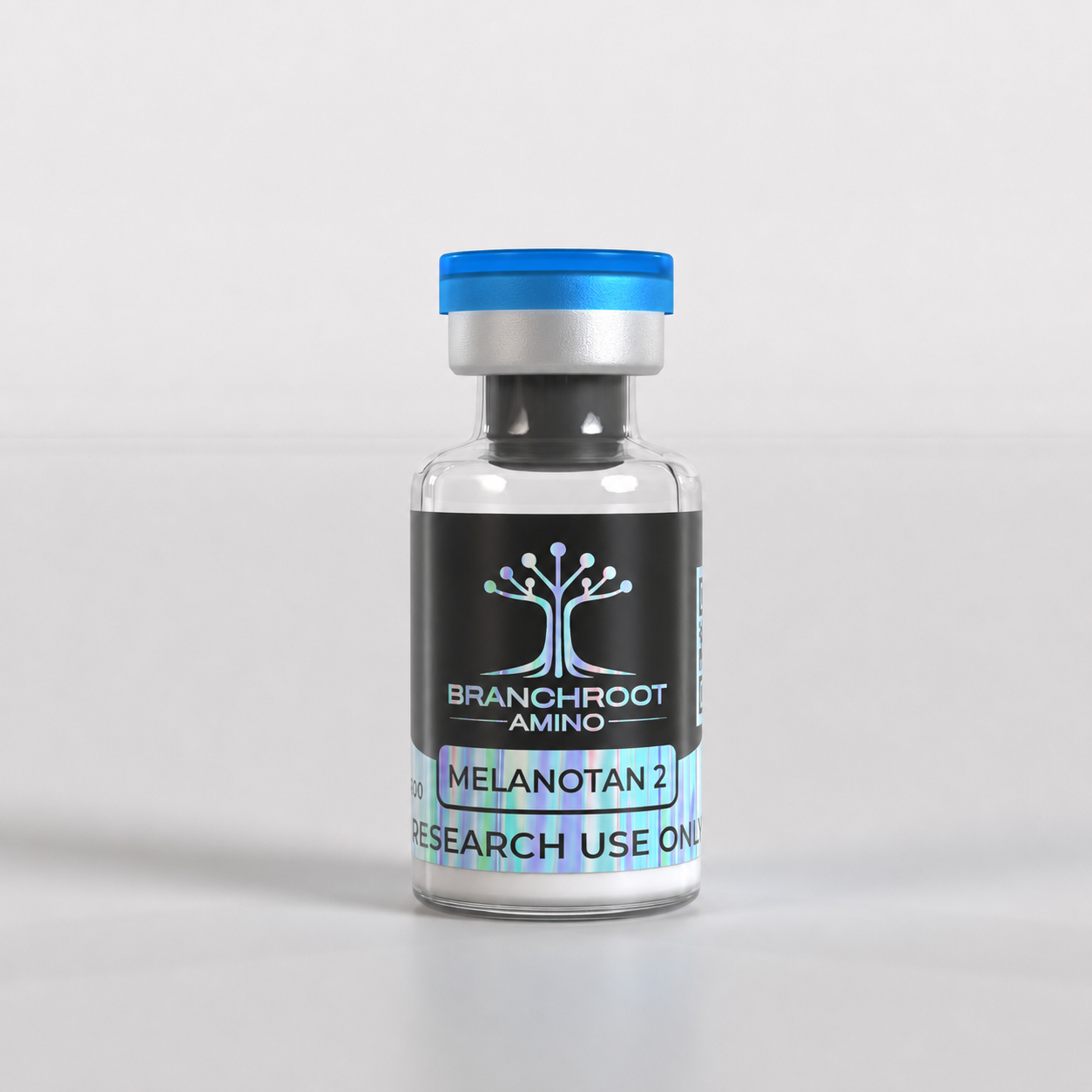
MT-2 MELANOTAN 2

Categories:

Melanotan 2 (MT-II) is a synthetic cyclic peptide analog of alpha-melanocyte-stimulating hormone (α-MSH). It is primarily investigated in preclinical and exploratory research for its interactions with the melanocortin receptor system, particularly in the areas of pigmentation biology, melanogenesis, and neuroendocrine signaling. MT-II has been studied in experimental models examining skin pigmentation, ultraviolet (UV) response mechanisms, and receptor-mediated physiological processes.

This compound is intended for academic and research applications only within controlled scientific environments, with no therapeutic or medical claims made. For research use only.

Reconstitution with BranchRoot bacteriostatic water is recommended for quality assurance.

$35.00

In stock

In stock

Satisfaction Guaranteed

Secure
Payment

Third-party
Tested

Research Use Disclaimer

Every serious peptide company prominently displays this. Example Research Use Only All products offered are intended strictly for laboratory research purposes. Products are not for human consumption and are not intended for diagnostic, therapeutic, or medical use. By purchasing from our website, customers confirm they are qualified researchers or laboratories and understand the intended research-use designation.

Melanotan 2 (MT-II)

Melanotan 2 (MT-II) is a synthetic cyclic peptide analog of alpha-melanocyte-stimulating hormone (α-MSH). It is primarily investigated in preclinical and exploratory research for its interactions with the melanocortin receptor system, particularly in the areas of pigmentation biology, melanogenesis, and neuroendocrine signaling. Due to its affinity for multiple melanocortin receptor subtypes, MT-II has been studied in experimental models examining skin pigmentation, ultraviolet (UV) response mechanisms, and receptor-mediated physiological processes.

Research Context

Developed from earlier melanocortin research, Melanotan 2 was designed to provide increased receptor stability and biological activity compared with endogenous α-MSH. In laboratory settings, researchers have investigated its ability to activate melanocortin receptors, with particular interest in MC1R-mediated melanin production and broader melanocortin signaling pathways.

Because the melanocortin system is involved in a variety of biological functions, MT-II continues to be evaluated in controlled research environments to better understand receptor interactions and downstream physiological responses.

Research Overview

Preclinical investigations have explored the effects of MT-II on melanogenesis, pigmentation pathways, and cellular responses associated with UV exposure. Research has also examined its broader activity across the melanocortin receptor family, including potential neuroendocrine and behavioral effects observed in experimental models.

As with many investigational peptides, ongoing research seeks to further characterize its pharmacological profile, receptor selectivity, and long-term safety considerations under controlled laboratory conditions.

Key Research Focus Areas

  • Melanin production and pigmentation biology
  • Melanocortin receptor signaling pathways
  • MC1R-mediated melanogenesis mechanisms
  • Experimental models of UV-response and photoprotection
  • Neuroendocrine and behavioral responses in preclinical research
  • Pharmacological characterization and receptor-binding studies
  • Toxicological evaluation and chronic-exposure assessment

Research Applications

MT-II is commonly referenced in scientific literature involving:

  • Melanocortin receptor pharmacology
  • Pigmentation and skin biology research
  • Peptide-receptor interaction studies
  • Cellular signaling investigations
  • Experimental toxicology and safety assessments

Important Compliance and Safety Information

MT-II is intended solely for research purposes and must be handled with the utmost care.
Users are responsible for ensuring compliance with all applicable local, regional, and national
laws and regulations governing peptide synthesis, storage, and distribution. Users must ensure
compliance with all relevant regulations governing research materials, including those related to
biohazards, chemical safety, and experimental oversight. Proper handling, storage, and disposal
procedures must be followed at all times. Research institutions conducting studies involving MT-II
must adhere to Institutional Review Board (IRB) or equivalent
biosafety procedures, laboratory handling standards, and animal welfare protocols.

Due to its biological activity, MT-II requires proper containment measures,
sterile handling techniques, and controlled storage procedures to minimize contamination
and unintended exposure. MT-II is not intended for therapeutic or diagnostic applications
in humans or animals, and should only be utilized within a licensed research environment. Always consult
with a qualified researcher, laboratory supervisor, or academic institution before use. Responsibility for
proper experimental design, safety protocols, and documentation rests solely with the investigator.

For research use only. Not for human or animal consumption.

Recommended Storage Protocol – 10 mg
Recommended Reconstitution Protocol – 10 mg


Lorem ipsum dolor sit amet, consectetur adipiscing elit. Ut elit tellus, luctus nec ullamcorper mattis, pulvinar dapibus leo.

At Hollywood Peptides, we provide more than just industry-leading compounds; we provide the certainty and excellence required for groundbreaking results. We recognize that in the world of science, there is no room for error. That is why every formulation we offer is subjected to stringent validation and certification protocols.
 
Lab Report
Date Added :
07/14/2026

Melanotan 2 (MT-II)

Melanotan 2 (MT-II) is a synthetic cyclic peptide analog of alpha-melanocyte-stimulating hormone (α-MSH). It is primarily investigated in preclinical and exploratory research for its interactions with the melanocortin receptor system, particularly in the areas of pigmentation biology, melanogenesis, and neuroendocrine signaling. Due to its affinity for multiple melanocortin receptor subtypes, MT-II has been studied in experimental models examining skin pigmentation, ultraviolet (UV) response mechanisms, and receptor-mediated physiological processes.

Research Context

Developed from earlier melanocortin research, Melanotan 2 was designed to provide increased receptor stability and biological activity compared with endogenous α-MSH. In laboratory settings, researchers have investigated its ability to activate melanocortin receptors, with particular interest in MC1R-mediated melanin production and broader melanocortin signaling pathways.

Because the melanocortin system is involved in a variety of biological functions, MT-II continues to be evaluated in controlled research environments to better understand receptor interactions and downstream physiological responses.

Research Overview

Preclinical investigations have explored the effects of MT-II on melanogenesis, pigmentation pathways, and cellular responses associated with UV exposure. Research has also examined its broader activity across the melanocortin receptor family, including potential neuroendocrine and behavioral effects observed in experimental models.

As with many investigational peptides, ongoing research seeks to further characterize its pharmacological profile, receptor selectivity, and long-term safety considerations under controlled laboratory conditions.

Key Research Focus Areas

  • Melanin production and pigmentation biology
  • Melanocortin receptor signaling pathways
  • MC1R-mediated melanogenesis mechanisms
  • Experimental models of UV-response and photoprotection
  • Neuroendocrine and behavioral responses in preclinical research
  • Pharmacological characterization and receptor-binding studies
  • Toxicological evaluation and chronic-exposure assessment

Research Applications

MT-II is commonly referenced in scientific literature involving:

  • Melanocortin receptor pharmacology
  • Pigmentation and skin biology research
  • Peptide-receptor interaction studies
  • Cellular signaling investigations
  • Experimental toxicology and safety assessments

Important Compliance and Safety Information

MT-II is intended solely for research purposes and must be handled with the utmost care.
Users are responsible for ensuring compliance with all applicable local, regional, and national
laws and regulations governing peptide synthesis, storage, and distribution. Users must ensure
compliance with all relevant regulations governing research materials, including those related to
biohazards, chemical safety, and experimental oversight. Proper handling, storage, and disposal
procedures must be followed at all times. Research institutions conducting studies involving MT-II
must adhere to Institutional Review Board (IRB) or equivalent
biosafety procedures, laboratory handling standards, and animal welfare protocols.

Due to its biological activity, MT-II requires proper containment measures,
sterile handling techniques, and controlled storage procedures to minimize contamination
and unintended exposure. MT-II is not intended for therapeutic or diagnostic applications
in humans or animals, and should only be utilized within a licensed research environment. Always consult
with a qualified researcher, laboratory supervisor, or academic institution before use. Responsibility for
proper experimental design, safety protocols, and documentation rests solely with the investigator.

For research use only. Not for human or animal consumption.

Recommended Storage Protocol – 10 mg
Recommended Reconstitution Protocol – 10 mg


Size

10MG

Reviews

There are no reviews yet.

Be the first to review “MT-2 MELANOTAN 2”

Related Peptides

Age Verification!

*By continuing, you confirm eligibility and legal compliance.