
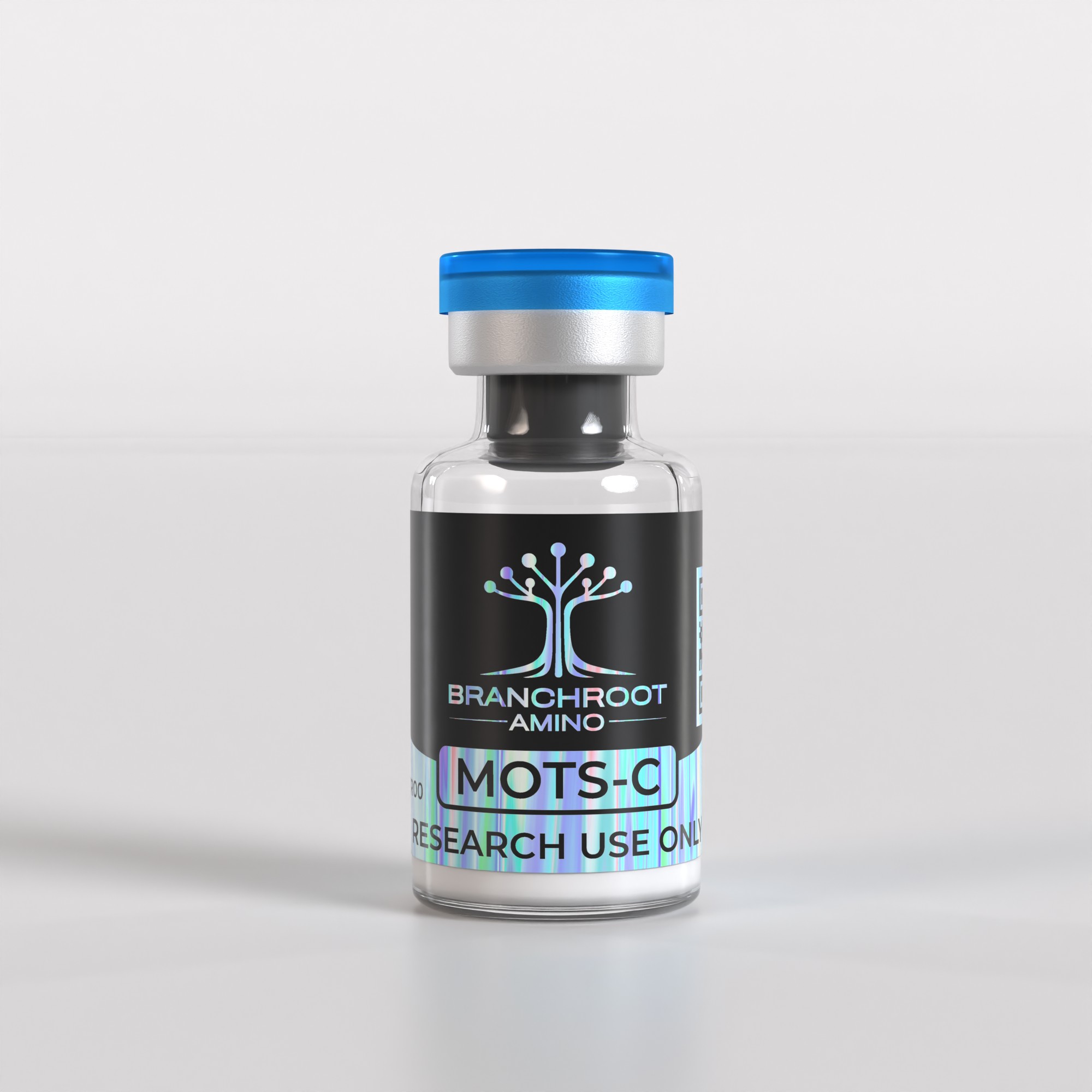
MOTS-C: A Research-Use-Only Peptide
MOTS-C (Mitochondrial-encoded Open Reading Frame Small Cysteine-Rich Peptide) is a short peptide derived from mitochondrial open reading frames. This research-use-only compound has garnered interest within academic and translational research communities for its potential implications in mitochondrial biology and cellular energetics. Due to its emerging research relevance, MOTS-C is presented here for study and investigation within controlled laboratory environments only.
Research Context
MOTS-C was first identified through sequencing efforts of mitochondrial genomes, where a short peptide sequence was discovered in the otherwise non-coding mitochondrial open reading frame (mtORF) located in the human genome. Early studies suggested that this peptide may play a role in regulating mitochondrial function, potentially influencing processes such as cellular metabolism, oxidative stress response, and longevity. Its structure, comprising a relatively short amino acid sequence, distinguishes it from other mitochondrially encoded proteins, enabling targeted research applications.
Research Overview
Initial investigations into MOTS-C have focused on its potential effects on mitochondrial biogenesis, energy homeostasis, and aging-related cellular mechanisms. Preclinical studies in model organisms (e.g., yeast, nematodes, and cultured mammalian cells) have demonstrated that MOTS-C can modulate mitochondrial dynamics, enhance cellular resilience under stress conditions, and influence metabolic adaptations. These findings have sparked interest in exploring its broader implications in fields such as metabolic disease research, neurodegenerative disorders, and age-related decline.
Key Research Focus Areas
- Mitochondrial Biogenesis and Function: Investigation into how MOTS-C may influence the expression of genes regulating mitochondrial proliferation and energy production, such as those encoded by the PGC-1α pathway.
- Oxidative Stress and Cellular Resilience: Exploration of MOTS-C’s role in mitigating mitochondrial dysfunction associated with oxidative damage, a critical factor in aging and disease.
- Metabolic Regulation: Analysis of its potential effects on glucose and lipid metabolism, particularly in contexts such as insulin sensitivity and energy expenditure.
- Neuroprotection and Neurodegeneration: Emerging studies suggest MOTS-C may contribute to neuroprotective mechanisms, warranting further investigation in models of neurodegenerative diseases (e.g., Alzheimer’s and Parkinson’s).
- Aging and Longevity: Preliminary data in model organisms hint at a possible extension of lifespan or improved healthspan through mitochondrial modulation, though mechanistic pathways remain under active study.
Safety and Compliance
Due to its emerging research relevance, MOTS-C must be handled with extreme caution. The peptide’s biological effects are not yet fully characterized, and its administration outside of controlled academic research settings is prohibited by law in many jurisdictions. Users are advised to adhere strictly to ethical guidelines, regulatory standards, and institutional review board (IRB) approvals applicable to their research endeavors. Responsibility for proper experimental design, safety protocols, and documentation rests solely with the investigator.
Important Compliance and Safety Information
MOTS-C is intended solely for research purposes and must be handled with the utmost care.
Users are responsible for ensuring compliance with all applicable local, regional, and national
laws and regulations governing peptide synthesis, storage, and distribution. Users must ensure
compliance with all relevant regulations governing research materials, including those related to
biohazards, chemical safety, and experimental oversight. Proper handling, storage, and disposal
procedures must be followed at all times. Research institutions conducting studies involving MOTS-C
must adhere to Institutional Review Board (IRB) or equivalent
biosafety procedures, laboratory handling standards, and animal welfare protocols.
Due to its biological activity, MOTS-C requires proper containment measures,
sterile handling techniques, and controlled storage procedures to minimize contamination
and unintended exposure. MOTS-C is not intended for therapeutic or diagnostic applications
in humans or animals, and should only be utilized within a licensed research environment. Always consult
with a qualified researcher, laboratory supervisor, or academic institution before use. Responsibility for
proper experimental design, safety protocols, and documentation rests solely with the investigator.
For research use only. Not for human or animal consumption.
| Size | 10MG, 40MG |
|---|---|
| Quantity | Single Vial, Kit of 10 |
You must be logged in to post a review.


Reviews
There are no reviews yet.